|
We are a group of researchers studying the effects of local ecology on host-parasite interactions.
We use a system of common eastern North American box-nesting birds and their associated nest ectoparasites. This means data can be collected from your own backyard! “Landlords” monitor the success of their bird boxes, and mail us the nests when the birds have fledged. We then dissect the nests and record what ectoparasites we find in them. From this data, we can analyze how climate, weather, location, altitude and more affect both host and parasite populations over time and space. We have over 150 landlords currently participating— will you be our next? |
Please e-mail our crew at [email protected]
for more information about joining our project as a landlord.
About the System
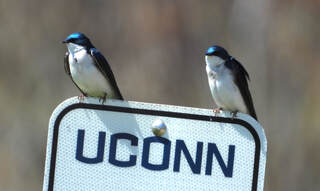
Photograph by Sydney Horan (2023)
Cavity nesters are birds that utilize small, sheltered "chambers" (called cavities) to lay eggs and raise their young. This includes holes in trees and backyard nest boxes alike. Two species of abundant cavity nesters in North America are the Eastern Bluebird (Sialia sialis) and the Tree Swallow (Tachycineta bicolor). They are widespread, abundant, and readily make use of nest boxes within their ranges.
In addition to cavities being great for nesting birds, a variety of ectoparasites also utilize these spaces. Some examples are avian blowflies, mites, and fleas. These arthropods drink the blood of nestling birds. Despite this, the parasites generally do not have an effect on nestling survival.
Like their hosts, the parasites are also widespread and vary across a range. By utilizing the NPCS project, we are able to get information on both birds and their parasites from many different locations in the eastern United States. This valuable data helps us to identify trends in a host-parasite system across a geographic range.
In addition to cavities being great for nesting birds, a variety of ectoparasites also utilize these spaces. Some examples are avian blowflies, mites, and fleas. These arthropods drink the blood of nestling birds. Despite this, the parasites generally do not have an effect on nestling survival.
Like their hosts, the parasites are also widespread and vary across a range. By utilizing the NPCS project, we are able to get information on both birds and their parasites from many different locations in the eastern United States. This valuable data helps us to identify trends in a host-parasite system across a geographic range.
Current UConn undergraduate and interested in the project? Please reach out! We are particularly recruiting students interested in parasitology, disease biology, and epidemiology.
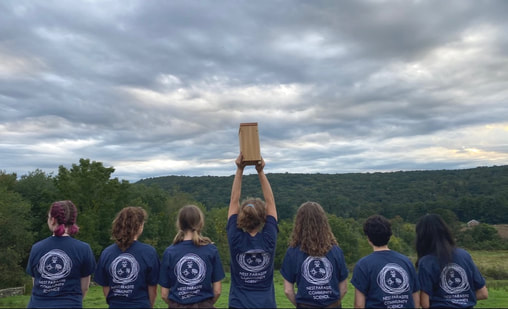
Fun stuff:
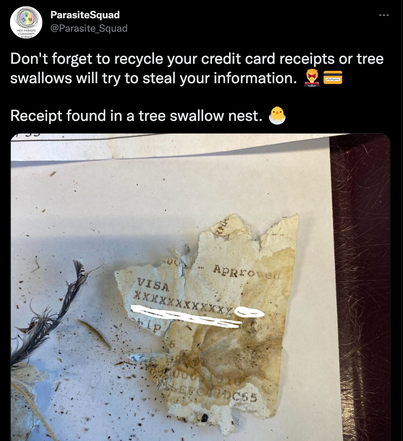
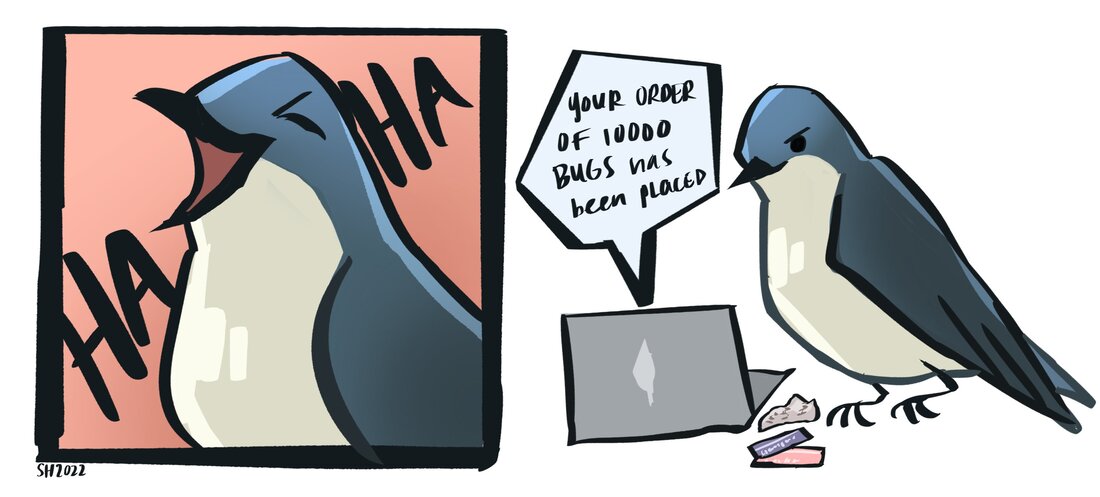
Comic by Sydney Horan based on the above observation by crew member Sila Inanoglu:
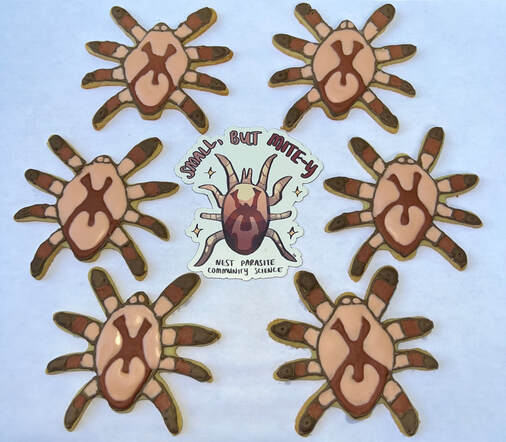
Stickers by Sydney Horan
|
|
|
Mite Cookies Anyone?